18 July 2019

Trainingscapes at the Future Education Trust for Leadership Summer Symposium


We were delighted to be invited by our client Bournemouth University to help showcase the work we are doing for them in VR training for midwives and nurses at the Future Education Trust for Leadership (FELT) Summer Symposium on "How technology will change teaching and education" held at the UK Parliament yesterday.

We'd rashly promised that we'd have Trainingscapes working on Oculus Quest for the event and we managed it, just! Denyse (left of picture, with Policy Connect CEO Jonathan Shaw trying the system out) brought BU's shiny new Quest and we brought 2 of our own (and a third turned up at the office today). Space-wise we only had two running in the end, but this is a far cry from the Rift demo's we've been doing as the Quests need minimal set-up, provide a stable environment, lots of good UI (showing real-world imagery whilst you define the guardian space and find the controllers) and all of a sudden VR is easy and you can afford to have multiple people try it at once!

Kneeling down to engage with a virtual 9 year old at eye-level
The content of the main symposium gave some interesting perspectives on technology in schools, FE and HE. Highlights for me were:

  • Excellent chairing by Paralympian Lord Chris Holmes, and highlighting the ongoing need for assisstive technology, and including the best use of Peter Gabriel song (and album) titles ever
  • Paul McKean from JISC providing a great future "day in the life" highlighting the role of tech, and also the fact that most tech mentioned is already in use somewhere (the old Gibson quote about the future is here already, its just not evenly distributed yet). Also some interesting thoughts on micro-credentials (mini/module-level qualifications) and how to aggregate those in the future.
  • Maren Deepwell from ALT talking about how to make users of learning technology into critical users, so that they are aware of potential issues of bias from AI etc
  • Deborah Millar from the Grimsby Institute of FE/HE talkign about their "Level Up" programme to upskill teachers in both LT and productivity and communications tools.
  • Dick Palmer from TEN Group and FELTAG talking about how past visions haven't panned out (must look up the Learning 2020 one he mentioned), and the opportunities for new tech in the land-based industries (didn't have time to show him our virtual cows!)
  • Interesting questions from the floor about personalisation of future LT, and the lack of skills in the current workforce and coming out of institutions in edutech learning design and authoring.


All in all a great day out!


10 July 2019

Office4AI Ministerial Roundtable Discussion

On the 24th June 2019 Daden  attended an AI Roundtable Discussion with Margot James MP, Minister for Digital and the Creative Industries, on the Industrial Strategy AI Sector Deal Anniversary. The event was held to help the Office for AI plan its Year Two strategy.

The Roundtable explored how Government and Industry can build on the successes of the AI Sector Deal.  The AI Sector Deal which aims to realise AI potential in the UK with a support package of up to £0.95 billion for the sector including improving institutions that support AI, building a skilled workforce and stimulating access to data. The Roundtable included a discussion on regional opportunities and involved participants based in the Midlands from the tech sector, academia and public sector.

Topics discussed included issues around AI development in the UK, in particular the conflict between the need to access large amounts of data versus the users right to privacy. The need for data lakes (vast quantities of data stored in it’s raw format) from which AI can learn was stressed and that the time to begin capturing the data is now! 

It was also good to see some of the AI projects that local businesses are working on as well as being able to demonstrate the A.I. technologies that Daden are working on such as Virtual Life coaches and Virtual Personas.

All in all a valuable opportunity for us to contribute to these national AI initiatives, and we were honoured to have been asked to take part.


8 July 2019

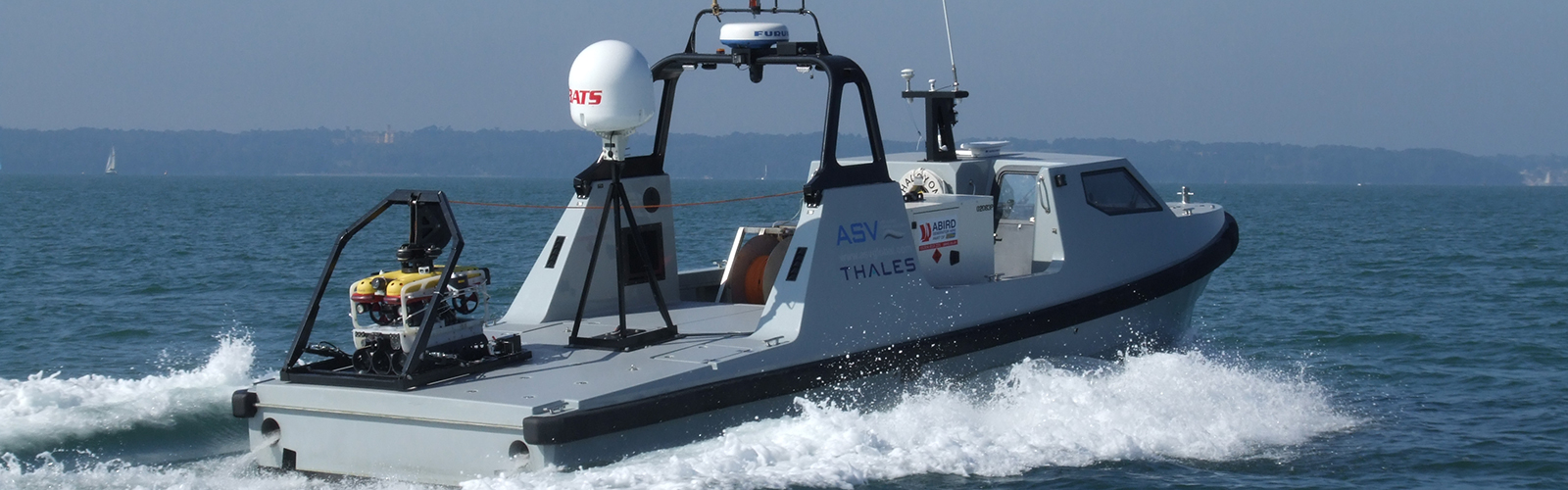
Daden selected by Thales as a Digital Maritime Pioneer


Daden are proud to have been selected as one of the Digital Maritime Pioneers by Thales.

Digital Transformation is changing the way both Defence and commercial organisations are operating in the maritime, land and air environments. Artificial Intelligence, Machine speed decision making and Virtual, Augmented and Mixed reality visualisation tools will all be part of Thales' digital offers in the future. Thales has been looking to rapidly assess these new technologies and build collaborative relationships with best of breed partners from wider markets, and to that end ran a Maritime Pioneers day in June at the Digital Catapult in London.

Thales reviewed 21 applications from some of the UK’s brightest and best start-ups and scale-ups in digital technologies, down selecting the six that responded most closely to the criteria, and whose products and expertise impressed the selection panel the most - one of whom was Daden!

Our pitch was based around the AViD project that we did for MOD DASA last year, which showed both 3D/VR subjective visualisation of maritime, aviation and -social media data, and conversational AI support in both the watch-keeping task and in controlling the visualisation environment.


We look forward to networking with the other winners and exploring with Thales how digital technologies such as AI, Augmented/Virtual Reality and Mixed Reality can be applied to maritime operations management.

23 May 2019

Oculus Quest - First Impressions


We’ve just taken delivery of our first Oculus Quest. This could actually be the “breakthrough” VR headset we’ve all be waiting for. Like last year’s Oculus Go it’s a completely self-contained device – no slipping in your phone, no wires to connect to a big expensive PC, it’s just the headset. You use your ordinary phone to control what software is loaded on it – but that just Wifi connects when you want to make a change. The big step up from the Go though is that the Quest has 6 degrees of freedom tracking – this means that not only does it track you as you look around, up and down, it also tracks you as you peer forwards, lean back – or even walk around the room. It does all this through hidden cameras in the headset which “map” the room in 3D (similar to the Hololens), and then track your movement within it – so no need for those Oculus desk sensors or Vive tripods. Graphically it looks fine unless you’re a real purist, and it takes ordinary glasses better than previous models.


Of course the proof will come when we use it for more than games, and the team is already hard at work getting it hooked up to Trainingscapes and Fieldscapes. One key question is how well it works when you have multiple users, each with a Quest headset, in the same room – all not only not trying to bump into other people but also not confusing the tracking. Another potential issue is any hurdles on getting Trainingscapes onto the Quest store – but that should keep us busy over the summer!

For clients Oculus Quest really could be the best solution out there. Slip-in phone devices have never been popular outside of schools, and PC+headset solutions have been too expensive and too cumbersome to deploy. But with Quest you could easily have a box of 6 or 12, turn up at a site or office, hand them out and let training commence!

16 May 2019

Virtual Humans Book Launch Report


We had a great (if late) launch for David's Virtual Humans book in Trinity College, Oxford on a lovely sunny Tuesday this week (hence the dark photos in a wood panelled college room!). David gave a brief overview of the history of the book and then there was a fascinating panel discussion chaired by Dame Glenys Stacey (HM Chief Inspector of Probation)(busy week for her!), followed by insightful questions from the floor before we all broke for drinks.

Some brief highlights from the panel session:

Carl Ohman (from Professor Luciano Floridi team at Oxford Internet Institute) spoke about “virtual humans as a new member of the human family” and  problem that there are already too many ethical frameworks for ethical AI ( just like technical standards!).

Sir Anthony Seldon (Vice-Chancellor of The University of Buckingham):

  • talked about AI as being a potentially bigger issue for the future than global warming
  • discussed the idea that humanness/consciousness was the residue once everything else has been transferred to the computer
  • and said that "every Vice Chancellor should get this book” - couldn't agree more!


Dr Elaine Kasket (author of All the Ghosts in the Machine: Illusions of Immortality in the Digital Age) talked about:

  • The After Wife by Cass Hunter and its exploration of the creation of a virtual human as a transitional grief object
  • The difference between passive, one way, digital grief entities (such as Facebook memorial pages) and more interactive or even active types (such as the Digital Immortals discussed in the book)
  • How some people see the commercial opportunities in Digital Grief - "100% of people die, so just think of the market” - talking about the digital grief industry, and questioning the various motivations within it


Dame Glenys Stacey gave a very favourable review of the book and was particularly struck by the 3 challenges identified: humanness (actually the easier one!), general purposeness and sentience - and the books accessibility to the interested lay reader.


Sir Anthony Seldon addressing the audience

Questions from the floor included:

  • Catfishing by digital immortals
  • AI ethical frameworks
  • The lack of chatbot/AI education in schools & FE/HE
  • When do these debates move out of academic/intellectual circles?
  • How the church confessional model relates to our engagement with chatbots and the objectivisation of roles
  • The potential abuse of power and virtual humans by those with malevolent intent, and
  • A Transhumanist perspective on what our lives will be like dealing with virtual humans #AI


Our thanks to all our friends, colleagues and interested readers and researchers who attended.

---

Maggi and David


We've also been sent this review  and photo of the event by Professor Liz Gilchrist ( Academic Head of Psychology, Criminology and the Centre for Violence Prevention (CVP) at the University of Worcester).


Professor Maggi Savin-Baden, School of Education held a book launch and signing of her co-authored book, ‘Virtual Humans’ David Burden, Daden Limited and Maggie Savin-Baden, University of Worcester, published by Taylor & Francis, New York , yesterday at Trinity College Oxford.

The event at the Oxford College included a book signing and a debate across a range of academics interested in various aspects of this area within AI, debating the issue: virtual humans a force for good or evil?

Those involved ranged from those studying chat bots, those interested in posthumous virtual identities, theological considering the implications for definitions of humanness and senior academics considering why academia has not engaged with this topic more fully, given the likely impact virtual humans will have on us in the future. The debate covered ethics, philosophy and educational policy and prompted a great deal of deep thinking.   

David and Maggi’s book was described as  a comprehensive and appealing read and summarised as  explaining the present situation in relation to virtual humans and making a good job of signalling the future, including posing some thought provoking questions.  It is said to be written for the intelligent lay reader – and includes a definition of a virtual human, considers the relationship between virtual humans and artificial intelligence more broadly and highlights 3 big issues around virtual humans improving humanness, contributing to increased intelligence, but questioned whether virtual humans could realise ‘sentience’ and achieve full consciousness.

Sir Anthony Seldon the Vice Chancellor of Buckingham  University commended the book and suggested that all VCs across universities in Britain should have a copy of this book to inform their thinking of where we should looking to move in HE….


2 May 2019

Virtual Humans Launch Event


We're having a somewhat belated launch event for David's book on Virtual Humans on 14th May at Trinity College Oxford, 3pm-5pm.  It will feature a panel discussion on Virtual Humans with Sir Anthony Seldon (Vice-Chancellor of The University of Buckingham), Dr Elaine Kasket (author of All the Ghosts in the Machine: Illusions of Immortality in the Digital Age) and Carl Ohman (from Professor Luciano Floridi team at Oxford Internet Institute). The debate will be chaired by Dame Glenys Stacey (HM Chief Inspector of Probation). Plus drinks and nibbles!

If you'd like to come then please sign up at: https://www.eventbrite.com/e/virtual-humans-book-launch-tickets-57426124083

4 April 2019

Research on a New Chatbot to Help Support Military Personnel


*** PRESS RELEASE ***

Military personnel may one day be able to get personalised day to day support for their busy lives thanks to a new project being delivered in response to a MOD Funding Competition. The project is being led by us in collaboration with Altruist Enterprises and the Institute for Employment Studies. Daden and Altruist are both based at the Innovation Birmingham Campus. The competition was run under the auspices of the Defence and Security Accelerator (DASA), sponsored by the Defence People (which sets the strategy for developing a capable and motivated military and civilian workforce within the MOD). The initial contract is worth £247,720.

The project aims to develop a mobile chatbot application with the intention of trialling it at RAF Fylingdales in North Yorkshire. In creating the application and content the team are working with the military users and managers to identify what support is needed, and also what other information and functionality would encourage personnel to use the application on a regular basis. Military life can require high levels of resilience from Forces’ personal with lengthy separations, frequent moves, deployments, shift-patterns and operational duties all adding to the load.  It is hoped that the app will help to reduce the friction of day-to-day military life, improve mental and physical health, well-being and resilience, support personal planning and development, and ensure that military personnel are more informed, motivated and fulfilled.

The app, which builds on previous work by us and the University of Worcester for the MOD, is designed to work on personal mobile phones and provide personnel with quick, direct, 24/7 access to information and support resources to help both them and their families. The app can also take a more pro-active role, offering up suggestions for short training sessions to help build resilience and well-being, to improve sleep, to manage stress, and to plan future personal development and career progression. It is not intended that the app does everything itself, rather it helps signpost users to trusted and appropriate web and mobile apps and resources, and of course to human support when that is the best way to deal with an issue.

RAF Fylingdales Station Commander Wg Cdr Alun Walton said "The virtual life coaching application will allow RAF Fylingdales serving military and families to engage with different aspects of modern life by embracing ever-present technology. This is a real step in the right direction for welfare and resilience and we look forward to contributing to the development of the application for all of Defence in the future."

David Burden, Managing Director of Daden Limited said, “Having something you can turn to quickly, at any time of the day or night, to get some advice about something that you might not right now want to speak to  another human about can be of real benefit. But from our work in this area so far we’ve been impressed at how mature users can be – recognising when a chatbot system like this is of real help, and when they really are better off speaking to a human.” 

Katie Buckingham, Managing Director of Altruist Enterprises, said “We are very pleased to be involved in such an exciting and worthwhile project. There has been a rising trend in the rate of UK Armed Forces personnel assessed with a mental disorder over the past 10 years. Our team of mental health and training specialists, in partnership with Daden and the IES, aim to provide individuals with the tools to build resilience and maintain positive well-being through the many challenges of military life.”

Dr Alison Carter, Principal Research Fellow at the Institute for Employment Studies, said “IES cross-sector research found that today’s job entrants - younger people in particular – are comfortable consuming information through technology, automation and chatbots, being handed over to a person when required. This already happens during recruitment and learning, and can be easily applied to cultivating better working lives.  IES is delighted to support this project which we expect will make a positive contribution to the wellbeing and engagement of military personnel.”

The current development phase of the project runs until May 2019, when hopefully approval will be given to continue to the live trial at RAF Fylingdales in the second half of 2019. As with much current MOD funded work there is also a real interest how such developments can also be used in the non-military domain to help grow UKplc. As such we are also developing a “civilian” demonstrator of the concept and talking to business and other organisations about how this could help support their own employees, staff and even students.