Showing posts with label 2D/3D. Show all posts

9 November 2020

A 3-Dimension UX Analysis of VR


Christian Schott and Stephen Marshall of the Victoria University of Wellington have quite a nice paper out in the Australasian Journal of Educational Technology, 2021, 37(1) and on open access at https://ajet.org.au/index.php/AJET/article/view/5166/1681.

Coming from an Experiential Education (EE) perspective they draw on a UX model by Hassenzahl and Tractinsky (2006) which consists "of three facets guided by a positive focus on creating outstanding emotional experiences, rather than on adopting a mostly instrumental, task-oriented view of interactive products, which is a core criticism of traditional HCI." 

  • "The first facet responds to this criticism of traditional HCI  and  is  termed  beyond  the  instrumental.  It  incorporates  aesthetics,  a  holistic  approach,  and  hedonic  qualities as features of the user experience. "
  • "The second facet builds on affective computing and extends emotion and affect to the user through positivity, subjectivity and the dynamic of antecedents and consequences. "
  • "The third facet is the experiential, which emphasises situatedness and temporality, and is characterised by user experiences that are complex, situated, dynamic, unique, and temporally-bounded".

The research used a VR experience of a Fijian island being developed to help better understand tourism economics on a Pacific Island, and the experimental subjects were Tourism Management students.

The UX evaluation identified 8 clusters of responses which map onto the three evaluation dimensions as shown above are were:

  • Sense of Place
  • Sensory Appeal
  • Natural Movement
  • Learning Enrichment
  • Comprehensive Vision
  • Hardware Concerns
  • Screen Resolution
  • Hyperreal Experience
  • Motion Sickness

Pity that Agency wasn't on there, and it would be interesting to see how a 2D/3D evaluation of the same experience would change the ratings and clusters give.

The authors conclude that "The evolution of VR technology is increasingly enabling high fidelity and motivating EE learning activities to be offered at a relatively low cost, particularly when the logistical, resourcing,  and  ethical  issues  of  alternative  approaches  are  considered. The nuanced  analysis  of  the  identified  positive  and  negative  themes,  through  the  lens  of  Hassenzahl  and  Tractinsky’s  (2006)  adapted  three  UX  facets,  has  provided  valuable  albeit  indicative  guidance  where  to  concentrate refinement efforts. However, it is also evident that a great deal of further research on the user experience  is  required  to  extend  our  understanding  of  full-immersion  VR  technology  as  an  important  opportunity for EE and higher education more broadly."

Nice paper, well worth a read, and the UX model and dimensions could be a useful one to bear in mind when looking at evaluating other 3D/VR experiences.

Hassenzahl, M., & Tractinsky, N. (2006). User experience - a research agenda. Behaviour & Information Technology, 25(2), 91-97. https://doi.org/10.1080/01449290500330331


2 November 2020

Time to Revisit 2D/3D?

The COVID epidemic is bringing a whole host of challenges to tutors and trainers in trying to deliver engaging teaching to students and staff – and in particular learning experiences which give the student a sense of context, place and shared experience. 

With on-site and classroom learning facing the greatest problems, many are naturally turning to remote teaching by Zoom (and similar), eLearning systems, or video. The diagram below briefly highlights key challenges with each of these - and we'll dive into more detail next week.


Whilst the uptake of headset-based virtual reality (HMD-VR) for both entertainment and training/education has been increasing in the last year or so (and Oculus sold out of the Quest headset early in the pandemic, and its new Quest2 had 5 times the pre-orders of the Quest1), the HMD-VR approach has its own challenges during COVID:

Sharing headsets within a central location needs rigorous cleaning between use

Posting/couriering headsets around remote students is costly and risky

The cost of equipping every student with their own VR HMD is too expensive for most organisations/institutions.

And this is quiet apart from the challenges of the space to use them (although we’ve found the garden is good – at least in summer!) and the discomfort that some users feel.

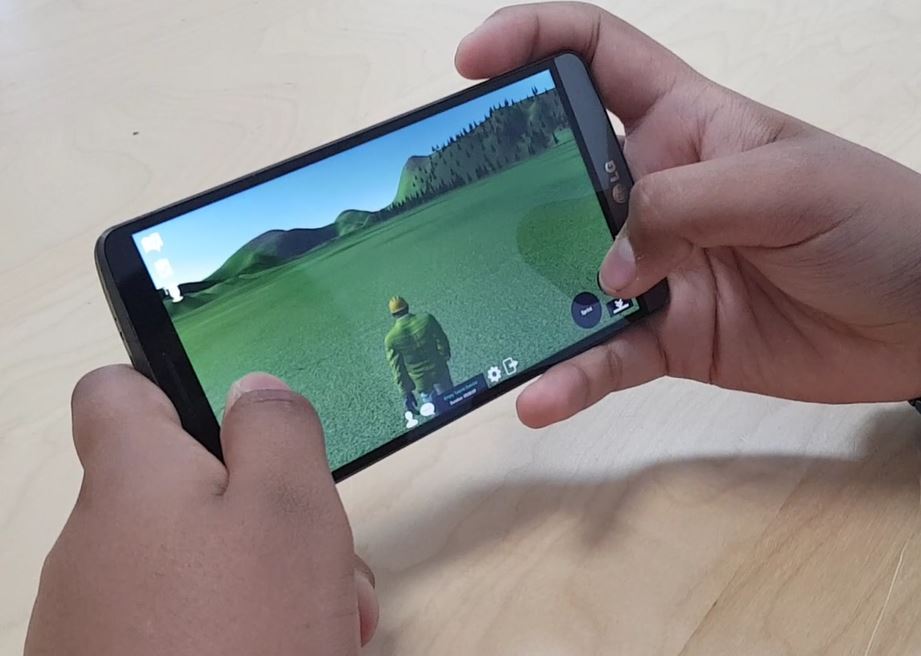
So given the current situation shouldn't tutors and trainers be re-considering the 2D/3D approach to immersive learning – the Sims/Computer Game style where you operate in a 3D environment but the experience is delivered on an ordinary 2D screen – be that on a PC/Mac, tablet or even smartphone.


Such systems have the advantages that:

  • Compared to Zoom you place students in the environment and they can learn when they want and a their own pace.
  • Compared to eLearning they have more agency, being able to tackle tasks in a variety of orders and ways, and can even undertake collaborative activities.
  • Compared to video the students again have more agency, more ability to explore the environment, and content can be changed on a regular basis for minimal or no cost.
  • Compared to HMD-VR there are no headsets to buy, clean or distribute, and students can potentially use their own smartphones or tablets alongside their own laptops


Such 2D/3D approaches appear to have been forgotten and brushed aside in the race to the latest "shiny" VR experiences, despite the fact that whilst there is a lot of evidence comparing traditional eLearning to VR there is little that shows significant benefits from VR as against 2D/3D - and even some which shows a negative "benefit"!

So isn't it time to re-assess the 2D/3D approach (and perhaps find a better name for it!)?

And of course with Trainingscapes you can generate content for 2D/3D and VR at the same time, so if the situation changes and VR becomes more do'able (for some students, some of the time) then you'll be ready.


19 October 2020

XR 2x2 Segmentation

(click image for better resolution)

Trying to unpick all the different emerging systems in the "extended reality" space such as Augmented Reality (AR), Mixed Reality (MR), Virtual Reality (VR) and then the "traditional" approaches such as 3D video games and virtual worlds can be a challenge, and we keep trying to find new ways to understand and communicate it.

In the graphic above we've tried to show the difference between the systems in terms of the access device and what they are trying to do to reality.

In one dimension we have whether the system is trying to completely replace what the user is seeing/experience - they only see the digital world, or whether it is augmenting it - adding new content into what the user otherwise sees as the physical world.

In the other dimension we have whether the system is accessed through a flat screen or a headset. The flat screen might be an ordinary PC screen, or a tablet or smartphone, whilst the headset might be a VR one or an MR one. A key point is that for the AR/MR solutions the access devices has some way of also showing the physical world which is being manipulated - via the phone camera for AR, or a transparent visor for MR.

These two dimensions then give us our four main use cases:

  • AR - which is overlaying reality but viewed through a (conventional) flat screen
  • MR - which is overlaying reality but viewed through a headset (visor)
  • 2D/3D systems like Second Life/computer games - which is completely replacing reality and viewed through a flat 2D screen
  • HMD VR - which is completely replacing reality and viewed through a headset (screen)
A key point is that the dimensions are about how we access and what we are trying to achieve. They are not about the software technology being used to generate the environments, or how its branded!

Let us know if you've any comments on this segmentation, and/or if you find it of use.